Android Phone Battery Replacement: When and Why You Need It
Learn the signs your Android battery needs replacing, what it costs, and when to seek professional help. Get fast, affordable Android phone battery replacement today.
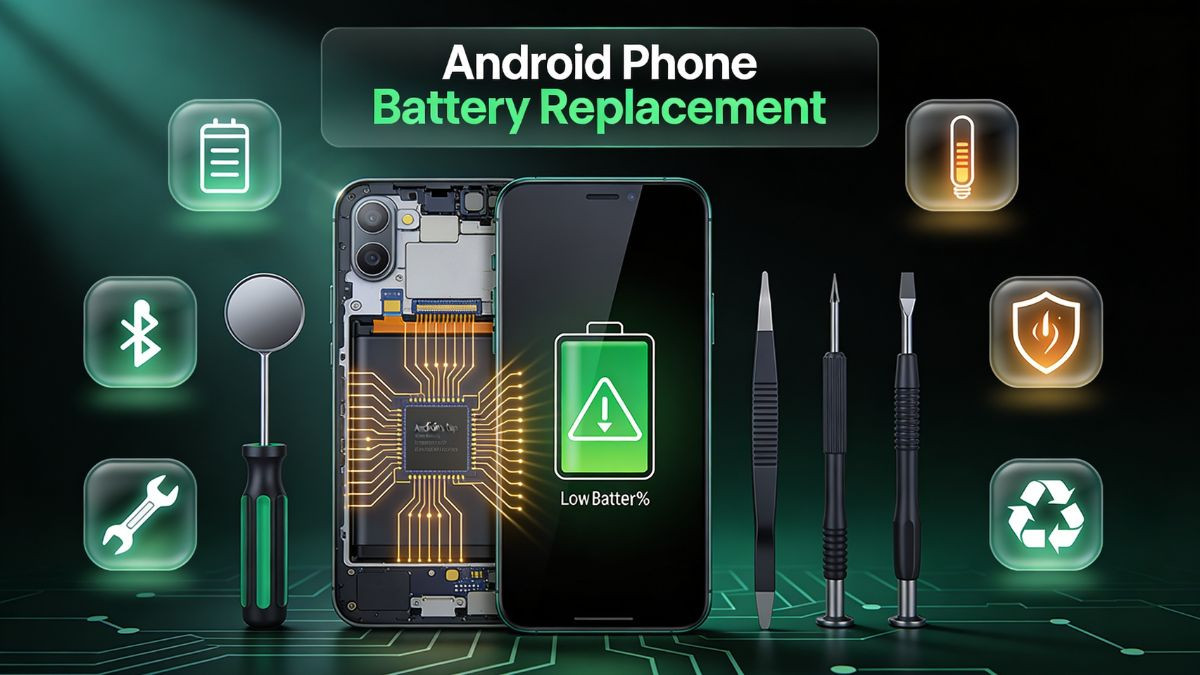
A smartphone without a functioning battery is essentially a very expensive paperweight. Everything a phone does — making calls, running apps, capturing photos, streaming content, navigating routes — depends entirely on the battery delivering consistent, reliable power. When that battery starts to fail, the entire experience of using the phone deteriorates in ways that are often frustrating, disruptive, and genuinely difficult to diagnose without some technical knowledge.
Android phones are built around lithium-ion or lithium-polymer batteries, both of which have a finite lifespan. Over time and through repeated charge cycles, these batteries lose their ability to hold a charge as effectively as they once did. What begins as a minor inconvenience — needing to charge the phone a bit more frequently — gradually becomes a serious problem. The phone may die unexpectedly at 40% battery, overheat during normal use, take hours to charge, or refuse to turn on at all.
Many Android phone owners respond to these symptoms by buying a new phone, assuming the device itself is simply worn out. In a significant number of cases, however, the phone is perfectly functional — only the battery needs replacing. A professional android phone battery replacement can restore a phone to near-original performance at a fraction of the cost of a new device. It is one of the most impactful and cost-effective repairs available in the mobile repair space.
This article covers everything that matters about Android battery replacement — the science behind battery degradation, the symptoms that signal a battery is failing, how the replacement process works, what it costs, and how to choose between a DIY approach and a certified phone repair service. Whether the device in question is a Samsung Galaxy, a Google Pixel, a OnePlus, or any other Android smartphone, the information here applies directly and practically.
How Android Phone Batteries Work and Why They Degrade
To understand why Android batteries fail and when replacement becomes necessary, it helps to understand the basic chemistry and mechanics behind how these batteries function in the first place.
Modern Android smartphones use lithium-ion (Li-ion) or lithium-polymer (Li-Po) batteries. Both work on the same fundamental principle: lithium ions move between a positive electrode (cathode) and a negative electrode (anode) through an electrolyte solution during charging and discharging. When a phone charges, lithium ions travel from the cathode to the anode and are stored there. When the phone is in use, those ions move back to the cathode, releasing energy in the process that powers the device.
This movement of ions is not perfectly reversible. Each charge cycle — defined as one full discharge and recharge — causes microscopic changes in the electrode materials. The electrodes gradually degrade. The electrolyte can break down slightly. The internal resistance of the battery increases over time. These cumulative changes reduce the battery's total capacity, meaning it holds less energy with each passing cycle.
Most lithium-ion batteries are rated for approximately 300 to 500 full charge cycles before their capacity drops to around 80% of the original maximum. For a user who charges their phone once a day, that works out to roughly one to two years of use before the battery performance begins to decline noticeably. Heavy users who charge multiple times daily will experience this degradation sooner. More disciplined users who practice better charging habits may extend their battery's useful life somewhat longer.
Temperature plays a significant role in battery health as well. Extreme heat accelerates the chemical degradation of the electrolyte and electrodes, causing faster capacity loss. Cold temperatures, while less permanently damaging, temporarily reduce the battery's ability to deliver power — a phone may shut down in cold weather even at a seemingly healthy charge level. This is why overheating is such a serious concern: an android phone that regularly runs hot is actively shortening its own battery life with every use.
Charging habits also matter. Repeatedly charging a phone to 100% and draining it to 0% creates more stress on the battery chemistry than keeping it in a moderate range between 20% and 80%. Most modern Android phones include built-in battery management systems that try to moderate this stress, but these systems can only do so much against years of heavy use and poor charging habits.
Understanding these underlying processes makes it clear that battery degradation is not a defect — it is a predictable consequence of how lithium-ion chemistry works. The good news is that a worn-out battery is entirely replaceable, and doing so can give an aging Android phone a completely new lease on life.
Clear Signs You Need an Android Phone Battery Replacement
Recognizing the warning signs of a failing battery early can prevent the problem from progressing to the point of complete device failure. There are several unmistakable symptoms that consistently indicate a battery is past its prime and needs professional attention.
Warning Signs at a Glance
| Symptom | Likely Cause | Urgency Level |
|---|---|---|
| Battery drains from 100% to empty in under 4 hours | Capacity loss — battery holds less charge | Moderate |
| Phone shuts off at 20–40% charge | Inaccurate battery calibration or voltage drop | Moderate to High |
| Phone won't turn on despite charging | Completely depleted or failed battery | High |
| Phone overheats during charging or use | Internal battery degradation or swelling | Very High |
| Battery visibly bulging back panel | Swollen battery — dangerous | Urgent |
| Phone charges very slowly or not at all | Battery or charging circuit issue | High |
| Battery percentage jumps erratically | Degraded battery cells, poor calibration | Moderate |
| Performance throttling and app crashes | OS throttling CPU to protect weak battery | Moderate |
The most universally recognized sign of a failing battery is rapid drain. When a phone that once lasted a full day on a single charge now struggles to reach lunchtime, the battery is losing its capacity to store energy effectively. This is a natural result of battery aging, but it crosses a practical threshold when the phone's usability is genuinely compromised.
Unexpected shutdowns are another strong indicator. When a phone powers off at 30%, 40%, or even higher charge levels, the battery is no longer able to deliver the voltage surge that the processor demands during intensive tasks. The phone's internal systems interpret this voltage drop as an empty battery and trigger a shutdown to protect the hardware. This is distinct from a software issue — it happens consistently during processor-intensive moments like launching apps, taking photos, or loading video content.
Performance throttling is a less obvious but equally significant symptom. Android operating systems and manufacturers like Samsung and Google have implemented battery protection features that automatically reduce CPU and GPU performance when battery health falls below certain thresholds. This is done to prevent unexpected shutdowns, but the side effect is a phone that feels significantly slower than it did when new. If the phone feels sluggish in ways that software updates and cache clearing have not resolved, a degraded battery may be the root cause.
A physically swollen battery is an emergency-level warning sign that should never be ignored. Swelling occurs when gas builds up inside the battery cell due to advanced chemical degradation. The expanding gas pushes outward, which in a sealed Android phone manifests as a bulging back panel, a screen that separates slightly from the frame, or a phone that rocks on a flat surface when it previously sat flat. A swollen phone battery repair should be handled by a professional immediately — swollen batteries carry a risk of rupture, fire, or chemical exposure if punctured or mishandled.
Why Your Android Phone Battery Drains So Fast
Fast battery drain is one of the most commonly reported problems in mobile repair, and it has several distinct causes. Some of them are software-related and can be addressed without any hardware repair. Others point directly to a battery that has degraded to the point of needing replacement.
Understanding which category the drain falls into requires some systematic troubleshooting. If the battery began draining faster after a software update, the culprit is likely a poorly optimized app or a background process consuming more power than expected. In this case, identifying and managing the offending app — or reverting problematic system settings — can improve drain without any repair needed.
If the drain has been gradual and progressive over many months, coinciding with the phone's age, the battery itself is almost certainly the primary cause. A battery that has lost 25–30% of its original capacity will drain proportionally faster under identical usage conditions. A phone with a battery holding 70% of its original maximum charge will run out of power roughly 30% sooner than it did when new — even if nothing else about the device or its usage has changed.
Background app activity is a major contributor to drain on both healthy and degraded batteries. Apps that continuously fetch data, maintain location tracking, or push notifications consume power around the clock. Social media platforms, navigation apps, and fitness trackers are common culprits. Managing app permissions and background refresh settings can reduce drain meaningfully.
Screen brightness and screen-on time are also significant. A display running at full brightness for extended periods is one of the largest single consumers of battery power on any smartphone. Reducing brightness, enabling adaptive brightness, and keeping screen timeout short all contribute to measurably better battery life.
However, when all software optimizations have been applied and the battery still drains abnormally fast — particularly when the phone is at rest, not running any active apps — the battery itself has degraded to the point where software fixes offer no meaningful relief. At that stage, a smartphone battery replacement is the only effective long-term solution.
The Danger of a Swollen Phone Battery and What to Do
A swollen battery is not just an inconvenience — it is a genuine safety hazard that requires immediate, appropriate action. Understanding the risks involved and how to respond correctly can prevent property damage and physical harm.
Lithium-ion batteries swell when the internal electrolyte breaks down and releases gases, a process called electrolyte decomposition. This happens due to deep discharge cycles, manufacturing defects, physical damage, or extreme heat exposure. Once gas begins accumulating inside the sealed battery pouch, internal pressure builds. In mild cases, the battery simply expands slightly. In more severe cases, the battery can rupture, causing leakage of corrosive materials, fire, or in rare extreme scenarios, explosion.
The physical signs of a swollen battery on an Android phone are usually noticeable. The back panel of the phone may bow outward or feel raised in the center. The screen may lift slightly away from the frame on one side. The phone may rock when placed on a flat surface, or a visible gap may appear between the display assembly and the body of the device.
If any of these signs are present, several things should be avoided immediately. The phone should not be charged further. It should not be placed in a pocket where it could be compressed. It should not be left on a flammable surface or in a hot environment. Attempting to puncture, flatten, or disassemble the battery without proper training and tools is extremely dangerous.
The correct response is to power the phone off if it is safe to do so, handle it carefully, and bring it to a professional mobile repair service as quickly as possible. Technicians trained in swollen phone battery repair have the tools and safety protocols to extract the battery without causing rupture, dispose of it responsibly, and install a properly functioning replacement.
Swollen batteries that are left in place continue to expand over time, creating increasing risk of damaging the phone's screen, motherboard, and other internal components. What might begin as a simple battery replacement can escalate into a far more costly repair — or total device loss — if the swollen battery is left unaddressed.
Android Battery Health Check: How to Diagnose Your Battery
Before committing to a battery replacement, it is worth performing a thorough android battery health check to confirm the battery is truly the problem rather than a software issue or another hardware fault. Several methods exist for checking battery health on Android devices.
Built-In Diagnostics
Many Android manufacturers include built-in diagnostic tools that can be accessed through the phone's settings or through hidden service menus. On Samsung devices, navigating to Settings Battery and Device Care Battery provides basic health information, and more detailed diagnostics can be accessed through Samsung's Members app, which includes a battery status check tool. On Google Pixel phones, Settings Battery Battery usage provides detailed app-level consumption data, and Google One can run full device diagnostics.
Some Android devices allow access to a service menu by dialing specific codes. On certain Samsung models, dialing *#0228# opens a battery status screen that displays current battery voltage, temperature, and charge level in real time. Not all Android manufacturers support these codes, however, and results vary by device and Android version.
Third-Party Diagnostic Apps
Several reputable third-party apps provide detailed android battery diagnostics beyond what the built-in settings offer. AccuBattery is one of the most well-regarded options, measuring battery capacity across real charge cycles and providing an estimate of current capacity as a percentage of the original design capacity. CPU-Z and AIDA64 also report battery health data alongside other hardware information. These apps cannot read battery data at the hardware level the way professional diagnostic tools can, but they provide a useful indication of battery condition for everyday users.
Professional Diagnostic Tools
The most accurate battery diagnostics come from professional-grade tools used in mobile repair shops. Equipment like Jiga, Power Doctor, or Magsafe diagnostic adapters — used in conjunction with specialized software — can measure true battery capacity, internal resistance, charge cycle count, and voltage stability under load. These measurements give a repair technician an accurate, objective assessment of whether the battery is failing and whether replacement is warranted.
If a phone is exhibiting multiple symptoms of a weak battery — rapid drain, unexpected shutdowns, slow charging, or overheating — and built-in diagnostics suggest health below 80%, a battery replacement is almost certainly the right call. A certified phone repair service can confirm this through professional diagnostics before any work begins.
How Android Phone Battery Replacement Works: Step-by-Step
The battery replacement process varies by Android model. Some phones are designed with user-replaceable batteries, though this design approach has become rare in modern smartphones. The majority of current Android devices have sealed, non-removable batteries that require professional tools and techniques to access safely.
The general process for a professional android phone battery replacement on a sealed device follows these stages:
Stage 1: Device Assessment and Diagnostics
Before opening the device, a technician runs diagnostics to confirm the battery is the root cause of the reported issues. This includes measuring battery health, checking charging circuit function, and ruling out software-related causes. This step prevents unnecessary repairs and ensures the correct part is ordered.
Stage 2: Powering Down and Preparation
The device is powered completely off. The technician prepares the workspace with appropriate tools: a heat gun or heating plate, precision screwdrivers, plastic pry tools, suction cups, tweezers, and isopropyl alcohol for adhesive removal. Anti-static precautions are observed to protect sensitive internal components.
Stage 3: Opening the Device
Most modern Android phones open from the back. The rear glass or plastic panel is secured with adhesive that must be softened using controlled heat — typically 60–75°C applied evenly around the perimeter of the device. Once the adhesive softens, a suction cup creates a separation point, and thin plastic picks are used to work around the edge and fully release the back panel.
Stage 4: Disconnecting the Battery
Once inside, the battery connector is disconnected from the motherboard before any other work proceeds. This is a non-negotiable safety step that prevents electrical shorts during the repair.
Stage 5: Removing the Old Battery
The battery is adhered to the phone's internal frame with pull-tab adhesive strips in some models, and with stronger adhesive in others. If pull tabs are present, they are stretched and pulled at a low angle to release the battery cleanly. When strong adhesive is used, a small amount of isopropyl alcohol is applied around the edges to weaken the bond, and a thin tool is used to gently pry the battery free. Bending or puncturing the battery during this step must be avoided.
Stage 6: Installing the New Battery
The replacement battery — whether an original equipment manufacturer part or a quality-verified aftermarket unit — is placed in the battery compartment. New adhesive is applied if needed. The battery connector is seated and pressed firmly onto the motherboard connector.
Stage 7: Testing Before Closing
Before the device is sealed, the technician powers it on and runs a brief test — confirming the battery is recognized by the system, the charge level reads accurately, and the phone powers on and off correctly. This step catches any connector issues before re-sealing.
Stage 8: Closing and Final Testing
The back panel is re-adhered using fresh adhesive or pre-cut adhesive strips. The phone is powered on fully, charged to confirm normal charging behavior, and tested for any anomalies. The repair is documented and the customer is briefed on any warranty terms.
This entire process, when performed by experienced professional phone repair technicians, typically takes between 30 minutes and one hour depending on the device model and accessibility of the battery.
Replacing a Non-Removable Phone Battery: What It Involves
The shift toward non-removable phone batteries has been one of the defining design trends of the past decade. Manufacturers argue that sealed batteries allow for slimmer profiles, better waterproofing, and more efficient use of internal space. From a user perspective, however, it means that replacing a dead battery is no longer as simple as popping off a back cover.
Replacing a non-removable battery requires opening the device — a process that voids the manufacturer's warranty in many cases and carries real risks if not performed correctly. The adhesive that seals modern Android phones is specifically designed to be difficult to remove, which means the process requires both heat and skill to execute without cracking the glass back panel or damaging internal components.
Certain brands and models present greater challenges than others. Samsung Galaxy S and Z series phones, for example, have glass backs bonded with particularly strong adhesive and often have tight internal tolerances that make battery access more intricate. Google Pixel phones — particularly the Pixel 7 and 8 series — have a reputation for being somewhat more repair-friendly than comparable Samsung models, though they still require professional tools.
OnePlus devices have traditionally been designed with slightly better repairability in mind, making oneplus battery replacement somewhat less complex than on competing flagship phones. Older Android models with plastic backs and lighter adhesive are generally the easiest non-removable battery replacements, while newer glass-backed flagships with IP-rated water resistance present the most technical challenges.
The water resistance of a device is particularly important to consider. Phones rated IP67 or IP68 rely on gaskets and adhesive seals around internal components, including the display and the back panel, to keep moisture out. Opening the device and replacing the battery can compromise these seals if fresh adhesive is not applied correctly during reassembly. A professional repair shop that takes water resistance seriously will use appropriate adhesive materials and apply them properly, restoring a reasonable level of moisture protection after the repair.
Android Battery Replacement Cost Breakdown
The cost of an android battery replacement varies based on several factors: the make and model of the device, the quality of the replacement battery used, the labor rates of the repair shop, and whether the repair is performed at an authorized service center or an independent shop.
Battery Replacement Cost by Device Type
| Device Type | Budget/Mid-Range Android | Samsung Galaxy Flagship | Google Pixel (Current Gen) | OnePlus Flagship | Older Android Models |
|---|---|---|---|---|---|
| OEM Battery (parts) | $15 – $35 | $40 – $80 | $35 – $65 | $30 – $60 | $10 – $25 |
| Aftermarket Battery (parts) | $8 – $20 | $20 – $45 | $18 – $40 | $15 – $35 | $5 – $15 |
| Labor Cost (typical) | $20 – $40 | $30 – $60 | $25 – $50 | $25 – $50 | $15 – $35 |
| Total Estimated Cost | $35 – $75 | $70 – $140 | $60 – $115 | $55 – $110 | $20 – $60 |
| Turnaround Time | 30–60 min | 45–90 min | 30–60 min | 30–60 min | 20–45 min |
These figures reflect typical independent repair shop pricing. Authorized Samsung service centers and manufacturer repair programs often charge significantly more — samsung phone battery replacement through Samsung's official service can run $70 to $100 or more for labor alone, before parts costs. That said, authorized centers use confirmed OEM parts and may be the appropriate choice for devices still under warranty.
For older Android models, a battery replacement frequently delivers the most dramatic performance improvement at the lowest cost. A phone that has been sluggish, draining fast, and shutting off unexpectedly can perform like a near-new device after a fresh battery — for a total repair cost of under $60 in many cases. This makes battery replacement for old android phones one of the best value repairs in mobile servicing.
It is also worth factoring in the cost of not replacing the battery. A degraded battery that causes constant unexpected shutdowns can damage app data, corrupt files, and create situations where important information is lost mid-use. If a swollen battery damages the display or motherboard through expansion, what was a $70 battery repair can escalate into a $200+ repair or total device loss. Early intervention is almost always more economical than delayed action.
DIY Battery Replacement vs Professional Repair: A Real Comparison
The availability of battery replacement kits and online tutorials has made DIY phone battery replacement more accessible than it was ten years ago. Kits containing the necessary tools and a replacement battery can be purchased for many common Android models. However, accessibility does not necessarily translate to advisability, and the genuine risks of a DIY battery replacement deserve honest examination.
DIY vs Professional Battery Replacement Comparison
| Factor | DIY Replacement | Professional Repair Shop |
|---|---|---|
| Total cost | Lower (parts only) | Higher (parts + labor) |
| Risk of damaging the device | Moderate to high | Low (trained technicians) |
| Battery quality assurance | Buyer-dependent | Shop-verified |
| Tools required | Many, some specialized | Available at shop |
| Repair warranty | None | Typically 30–90 days |
| Water resistance restoration | Difficult to achieve | Managed with proper materials |
| Time investment | 1–3 hours minimum | 30–60 minutes |
| Skill level needed | Intermediate to advanced | Professional |
| Risk of battery puncture | Real if inexperienced | Controlled and minimal |
| Access to diagnostics | Limited | Full diagnostic tools |
DIY battery replacement makes the most practical sense in specific circumstances: the device is old and has minimal monetary value, no professional repair option is reasonably accessible, the person performing the repair has genuine hands-on electronics experience, and a quality replacement battery from a reputable supplier is available for the specific model. Under these conditions, a DIY repair can be a reasonable choice.
For most people with current-generation Android devices, professional repair is the more sensible path. The risk of puncturing a lithium-ion battery during a clumsy disassembly attempt is not trivial — a punctured lithium battery can release toxic gases, catch fire, or cause chemical burns. The cost of replacing a screen that was cracked during an amateur back-panel removal attempt will far exceed the labor cost that a professional shop would have charged for the battery replacement alone.
The value of professional repair also extends to diagnostics. A trained technician will confirm the battery is truly the failing component before beginning any work. In a meaningful percentage of cases, what appears to be a battery problem is actually a charging port issue, a software fault, or a combination of factors. A walk in phone battery repair service can identify all contributing problems and address them correctly, rather than replacing one component while leaving another root cause unresolved.
Choosing the Right Battery: Genuine vs Aftermarket Options
The replacement battery used in a repair directly determines the quality and longevity of the results. Not all replacement batteries are equal, and the difference between a genuine android replacement battery and a low-grade counterfeit can be dramatic in terms of performance, safety, and durability.
Battery Quality Comparison
| Battery Type | Capacity Accuracy | Safety Certification | Expected Lifespan | Price Range | Recommended Use |
|---|---|---|---|---|---|
| OEM/Genuine Manufacturer | Exact rated capacity | Full certification | 2–3+ years | Highest | Best for flagship devices |
| High-Quality OEM-Grade Aftermarket | 95–100% of rated capacity | CE, UL certified | 1.5–3 years | Moderate | Good for most devices |
| Standard Aftermarket | 80–95% of rated capacity | Varies | 1–2 years | Low to moderate | Acceptable for older devices |
| Budget/Unverified Aftermarket | Often overstated capacity | Often unverified | Unpredictable | Lowest | Not recommended |
Genuine manufacturer batteries are calibrated to the exact specifications of the device they are designed for. When a samsung phone battery replacement is performed using an OEM Samsung battery, the phone's battery management system reads capacity accurately, charging behavior is optimal, and the battery's thermal profile matches what the device's hardware was designed to manage.
High-quality OEM-grade aftermarket batteries from reputable suppliers occupy a close second position. The best of these are manufactured to standards that match or approach OEM specifications, carry legitimate safety certifications such as CE and UL markings, and deliver performance that is indistinguishable from genuine parts in everyday use. For devices where OEM batteries are difficult to source or prohibitively expensive, a certified aftermarket option from a reputable supplier is a reasonable and practical choice.
Budget aftermarket batteries are where the real danger lies. These products frequently misrepresent their capacity — a battery labeled as 4,000mAh may actually hold 2,500mAh or less under real-world conditions. Safety certifications on packaging may be fabricated. The risk of premature swelling, overheating, or failure is significantly higher. A high capacity replacement battery android that is sourced from a reputable supplier represents genuine value; a cheap no-name equivalent represents a false economy at best and a safety risk at worst.
When choosing a repair shop, ask specifically where they source their batteries and whether those parts carry any form of certification or quality guarantee. A reputable shop will answer this question clearly and confidently.
How to Extend Android Battery Life After Replacement
A fresh battery is an opportunity to reset habits and extend the life of the new cell as long as possible. The way an Android phone's battery is treated from the moment it is installed will determine how long it maintains strong health before degradation sets in again.
Battery calibration is a useful first step after a replacement. While modern Android phones handle calibration automatically to a significant degree, running the new battery through one or two full charge cycles — charging to 100% and allowing it to drain to around 15–20% before recharging — helps the battery management system accurately calibrate its readings to the new cell's capacity. This leads to more accurate battery percentage reporting from the outset.
Avoiding extreme charge levels is one of the most impactful long-term habits. Keeping the battery between 20% and 80% during everyday use significantly reduces the chemical stress on lithium-ion cells compared to regularly charging to full and draining completely. Many Android phones now include battery care settings — Samsung's Battery Protection mode, for example, can limit charging to 85% to reduce long-term wear on the battery.
Heat management is equally important. Charging the phone in a cool environment, removing phone cases during charging if the device gets warm, and avoiding leaving the phone in direct sunlight or a hot car all contribute to preserving battery health over time. Wireless charging, while convenient, generates more heat than wired charging and can accelerate battery degradation if used exclusively over a long period.
Software optimization plays a role as well. Keeping background apps well-managed, using dark mode on AMOLED-equipped Samsung devices, reducing screen brightness, and enabling battery saver mode during periods of low use all contribute to slower overall battery depletion. These habits will not reverse chemical degradation, but they meaningfully slow the rate at which it progresses after a new battery is installed.
Eco-Friendly Phone Battery Recycling: Why It Matters
Battery disposal is a topic that deserves attention alongside the practical aspects of replacement. Lithium-ion batteries contain materials — including lithium, cobalt, nickel, and manganese — that are toxic to the environment if improperly discarded. When old batteries end up in general waste streams, these materials can leach into soil and groundwater, causing environmental damage that extends far beyond the immediate disposal site.
Eco friendly phone battery recycling is not just an environmental responsibility — in many jurisdictions, it is also a legal requirement. Lithium-ion batteries are classified as hazardous waste in most countries and must be disposed of through designated recycling channels, not placed in standard household rubbish.
Most professional mobile repair shops have established recycling partnerships or drop-off protocols for used batteries. When a battery is replaced at a reputable repair service, the old battery should be taken and disposed of appropriately rather than handed back to the customer for independent disposal. This is one of the practical advantages of using a professional service — proper disposal is handled as part of the repair process.
For individuals who have old batteries from previous DIY repairs or removed parts, local electronics recycling centers, household hazardous waste collection events, and major retailers with in-store recycling programs all provide appropriate disposal options. Batteries should never be placed in fire, as thermal runaway in a disposed lithium-ion battery can cause serious fires that are difficult to extinguish.
The broader context matters too. As smartphone use continues to grow globally, the volume of lithium-ion batteries cycling through devices represents an enormous waste and resource challenge. Supporting eco-friendly disposal practices — whether through individual choices or by patronizing repair shops that take recycling seriously — contributes to a more sustainable approach to consumer electronics.
Get Your Android Battery Replaced by Experts Today
A failing battery should not define the experience of using a phone that is otherwise perfectly functional. Whether the device is shutting off unexpectedly, draining at alarming speed, refusing to charge properly, or showing the concerning signs of a swelling battery, professional help is available — and it is faster, more affordable, and more reliable than most people expect.
At Phone Repair Place, the team handles android phone battery replacement across a wide range of devices — including Samsung Galaxy models, Google Pixel phones, OnePlus devices, and many other popular Android brands. Every battery repair begins with a thorough diagnostic assessment to confirm the battery is the root cause of the issue, not a charging port fault, software problem, or other hardware concern. This ensures that every repair actually solves the problem rather than simply replacing a part.
Same-day battery replacement service is available for most common Android models, with turnaround times typically under an hour. Quality-verified replacement batteries are used on every repair — customers can discuss part options and pricing transparently before any work begins. Every battery replacement is backed by a warranty on both parts and labor, because the job is not considered complete until the device is performing the way it should.
Walk-ins are warmly welcome, and the team is available to answer questions, run quick diagnostics, and provide honest, no-obligation quotes. For those who prefer to plan ahead, appointments can be arranged for added convenience.
Do not wait for a failing battery to become a bigger, more expensive problem. Bring the device in, call ahead, or visit the website to learn more about available services and pricing.
Phone Repair Place
3500 East-West Hwy STE 1417,
Hyattsville, MD 20782, United States
(202) 870-4914
https://phonerepairpgmall.com/
Frequently Asked Questions
How do I know if my Android phone battery needs replacing?
The most common signs include rapid battery drain, unexpected shutdowns at moderate charge levels, slow or inconsistent charging, overheating during normal use, and a visibly swollen or bulging back panel. Running an android battery health check through the device's built-in battery settings or a third-party diagnostic app like AccuBattery can provide a clearer picture of whether capacity has declined enough to warrant a replacement.
How much does an Android phone battery replacement typically cost?
The android battery replacement cost depends on the device model and the quality of the replacement battery used. For most mid-range Android devices, a full battery replacement at a professional repair shop ranges from $35 to $75 including labor. Samsung Galaxy flagship models typically cost between $70 and $140 total. Google Pixel and OnePlus battery replacements generally fall in a similar range, with same-day service available at most independent repair shops.
Is it safe to replace an Android phone battery myself?
A DIY replacement is possible on some older Android models with more accessible battery compartments, but it carries real risks on modern sealed devices. Improperly removing a lithium-ion battery can result in punctures that cause fire, chemical exposure, or damage to other internal components. For most current-generation Android phones, a certified phone repair service is the safer and more reliable option, particularly given that professional repairs include a warranty.
Can a swollen Android battery be repaired, or does it need full replacement?
A swollen phone battery cannot be repaired — it must be replaced entirely and disposed of through proper recycling channels. A swollen battery is a safety hazard that worsens over time, and continued use risks damaging the phone's screen, frame, and motherboard. The replacement should be carried out by a professional technician experienced in handling swollen batteries safely.
Will replacing the battery make my old Android phone feel faster?
In many cases, yes. Android devices — particularly Samsung models running newer operating systems — automatically throttle CPU performance when battery health drops below certain thresholds, to prevent unexpected shutdowns. Replacing the battery with a healthy unit removes this throttle, restoring the phone's original processing speed. Users often report their phone feeling significantly faster and more responsive after a professional battery replacement.
How long will a replacement Android battery last?
A quality replacement battery — whether OEM or a certified aftermarket unit — should deliver between 18 months and three years of strong performance under typical use conditions, similar to the original battery's lifespan. Adopting good charging habits, such as avoiding extreme charge levels and keeping the device cool during charging, will extend the replacement battery's useful life. A reputable repair shop will also provide a warranty covering the replacement battery for an initial period following the repair.